Launch offer — valid today only

📄 Digital book in PDF · read it on your phone or print it

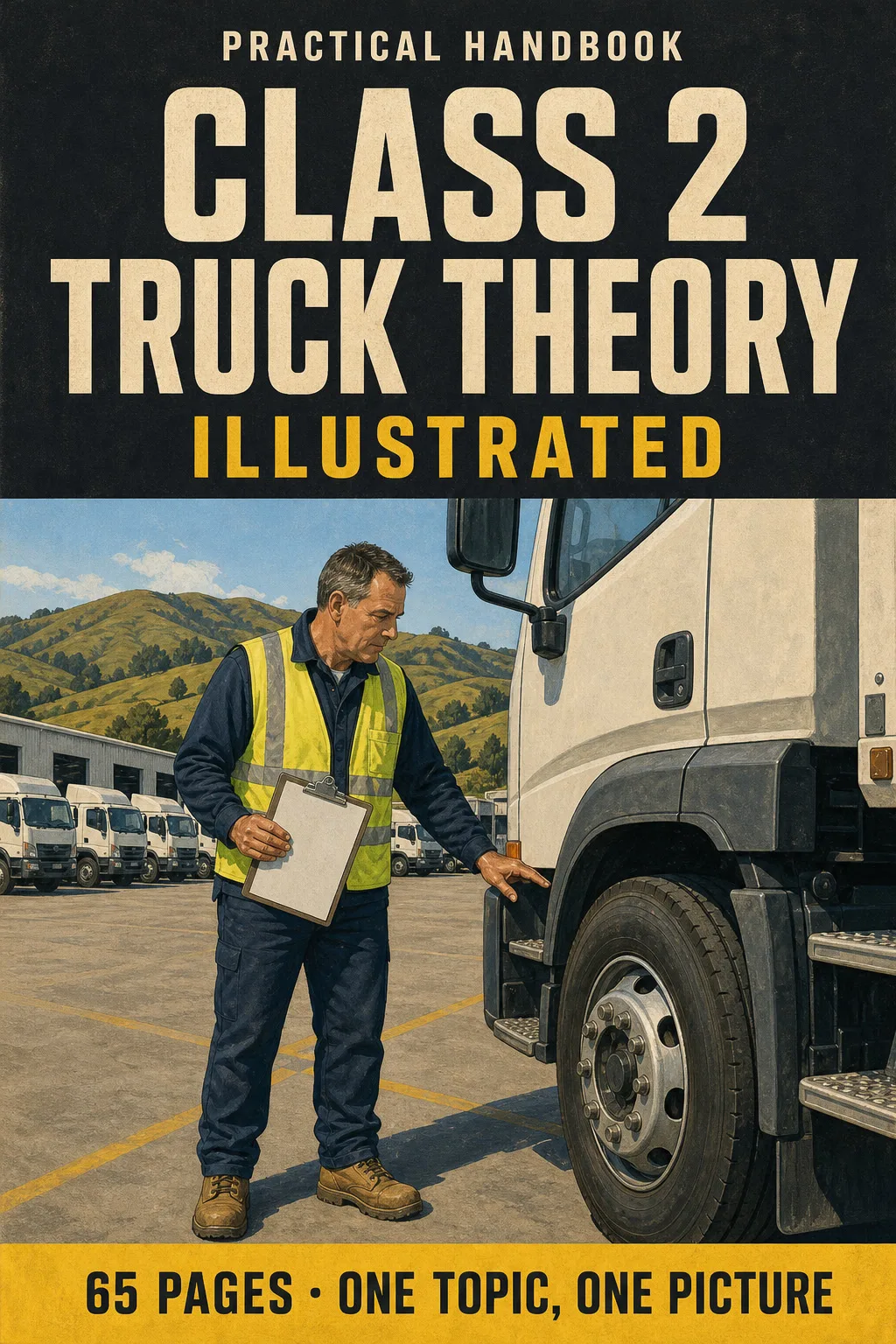
The NZ Class 2 Truck Theory Test in Drawings Air Brakes, Swept Path and Work Time You Can Picture in the Test Room

Road rules, following distance, mirrors and blind spots, swept path, air brakes, load security, mass limits and work time. Every topic gets its own page: the drawing first, then what you need to remember. 65 illustrated pages.

I WANT CLASS 2 TRUCK THEORY ILLUSTRATED

🔒 Secure checkout · PDF by email · 30-day guarantee

Every topic, its own pageEach rule drawn, with the explanation right beside it
65 illustrated pages8 parts, from the Class 2 licence to the night before the test
Up-to-date sourcesHeavy vehicle Road Code, Land Transport Rules and the NZ Truck Loading Code
PDF by emailFormat

Look Inside the Book

Every page has one big drawing and a box with the numbers and rules you need to know:

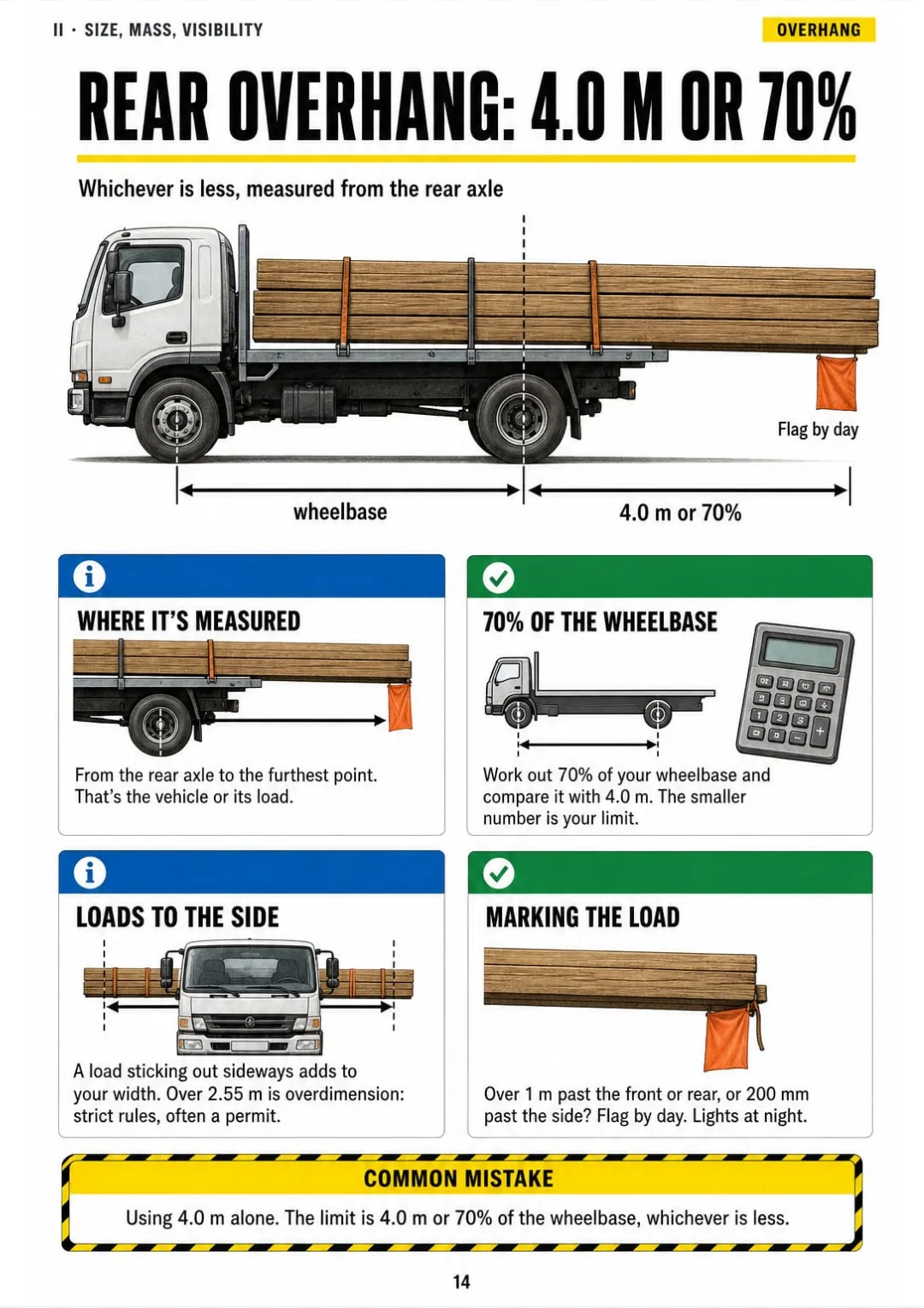
Rear overhang limit: 4.0 m or 70% of wheelbase (4.25 m with a steering rear axle).
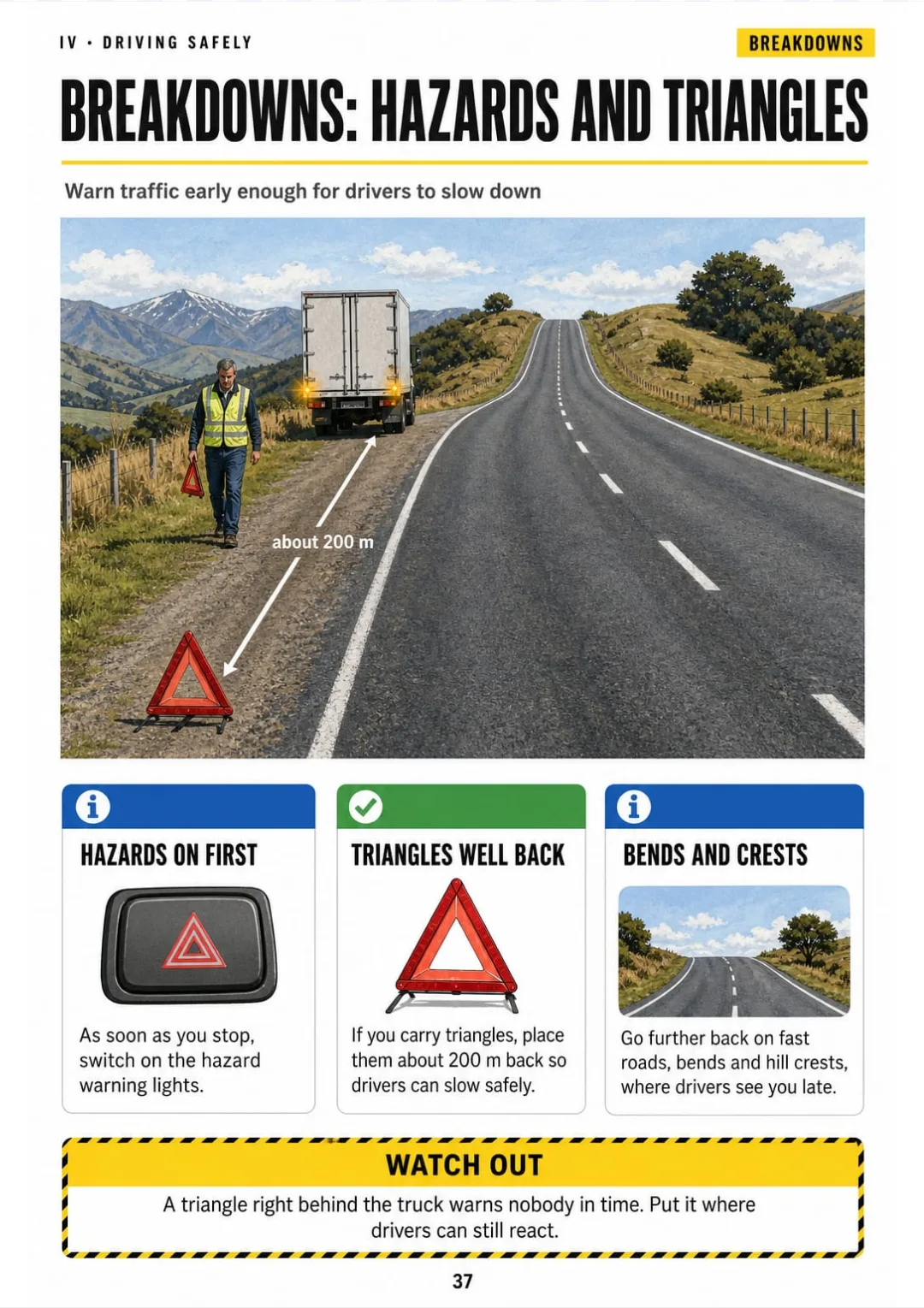
Breakdown: hazards on, warning about 200 m back, more on bends and crests.
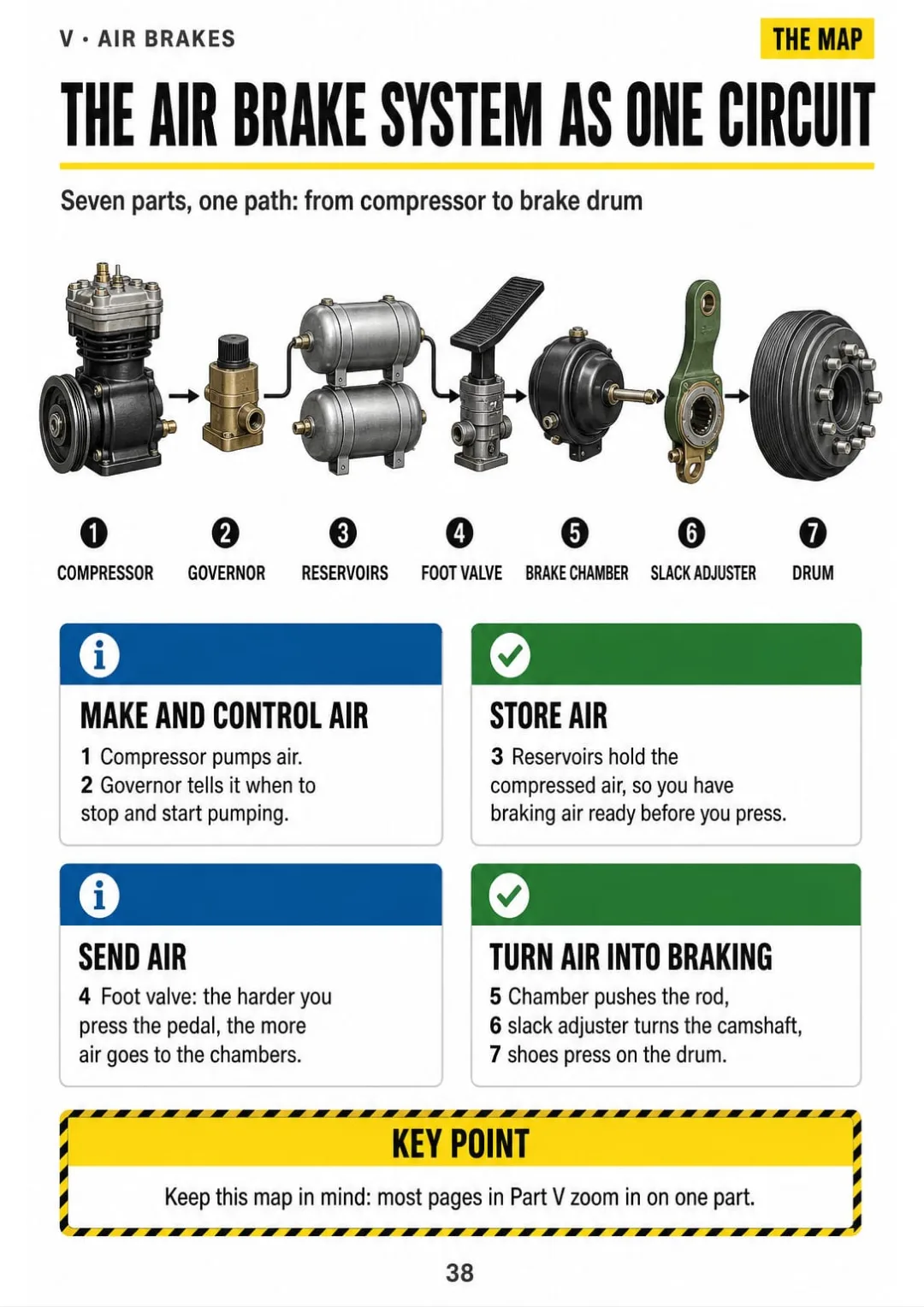
Compressor → governor → reservoirs → foot valve → chamber → slack adjuster → drum.
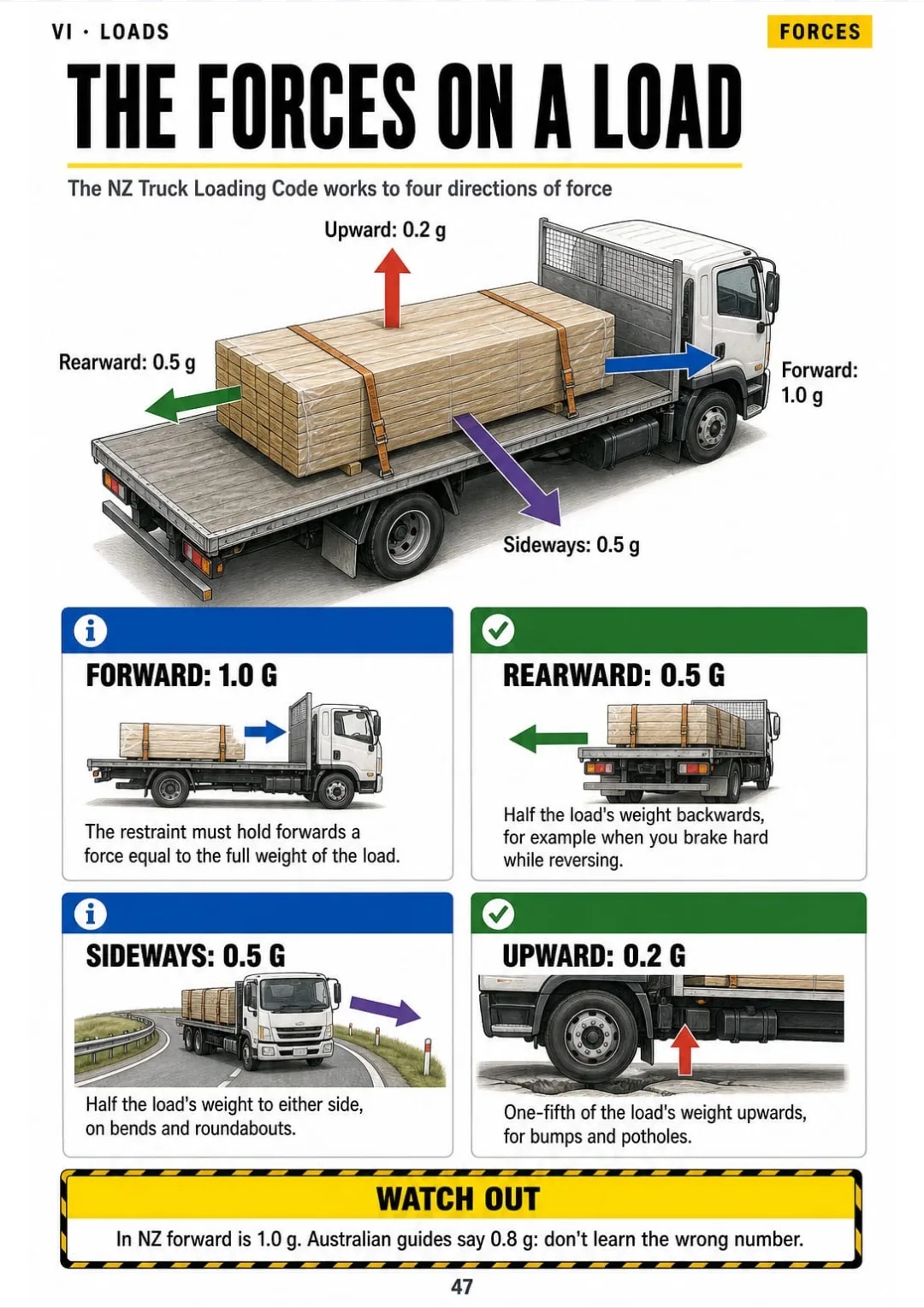
Forward 1.0 g, rearward and sideways 0.5 g, upward 0.2 g: the NZ load forces.
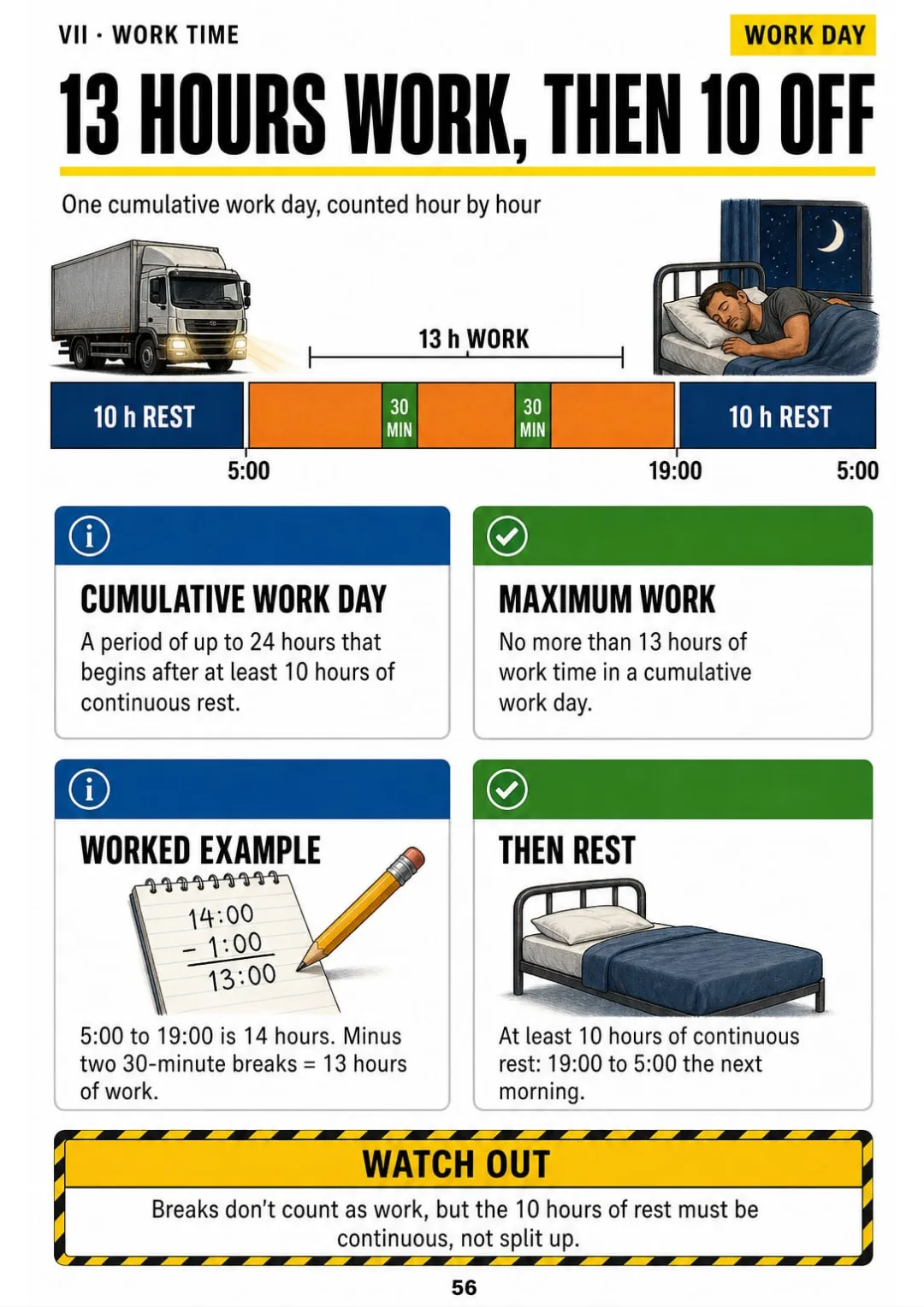
Max 13 hours of work in a cumulative work day, then at least 10 hours of continuous rest.
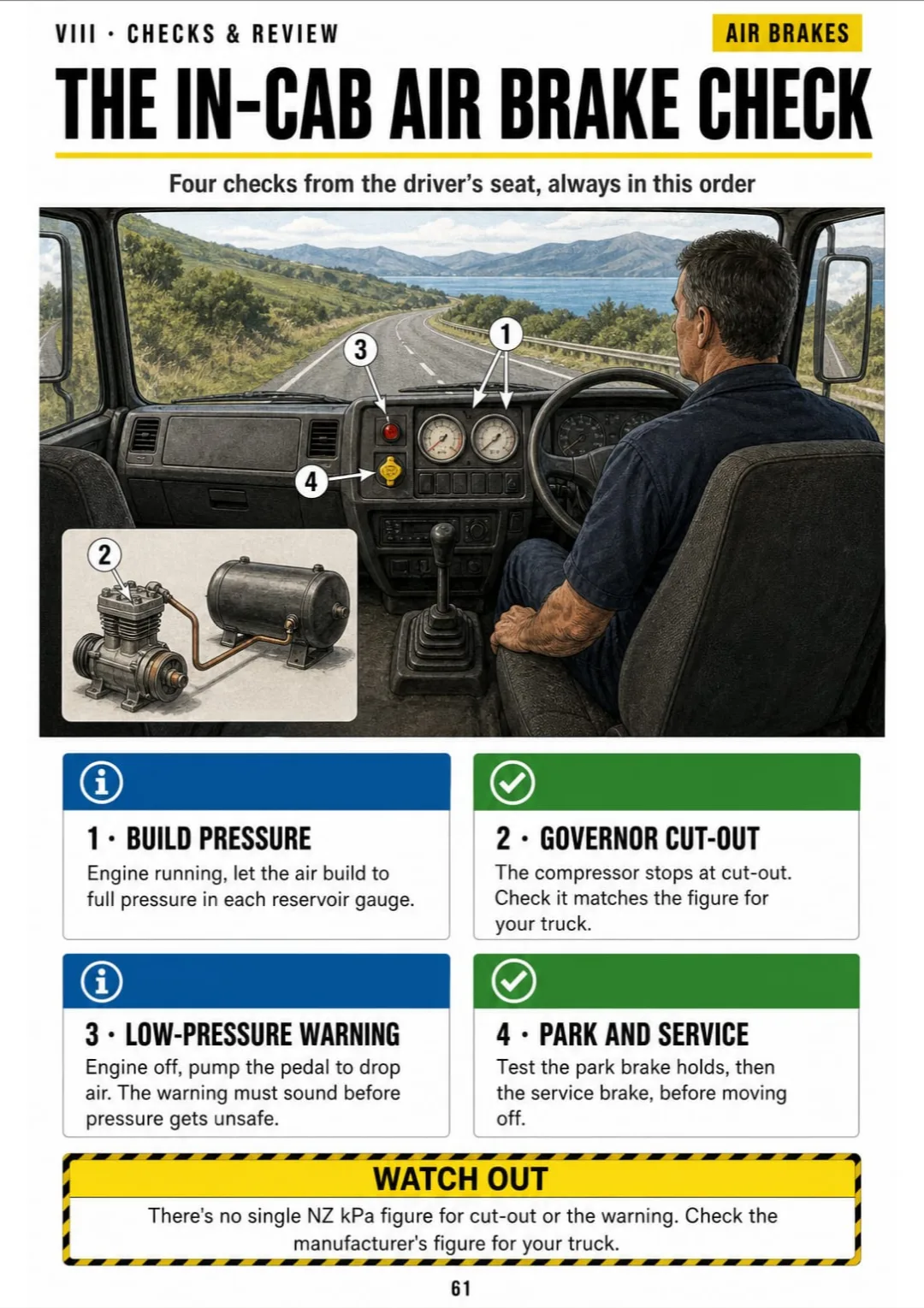
In-cab air check: build pressure, governor cut-out, low-pressure warning, park and service brakes.
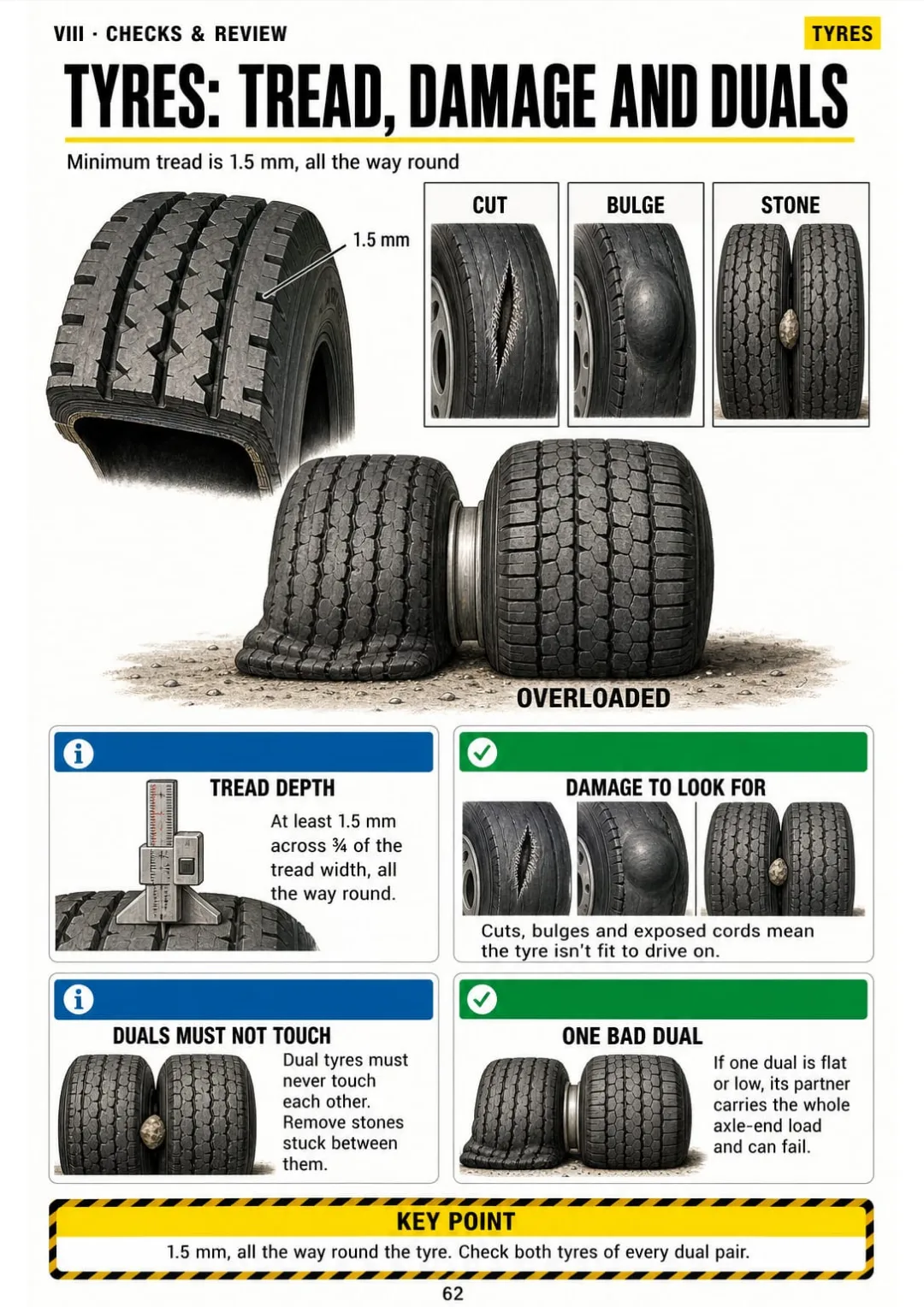
Minimum tread 1.5 mm right round; a flat dual overloads its partner.
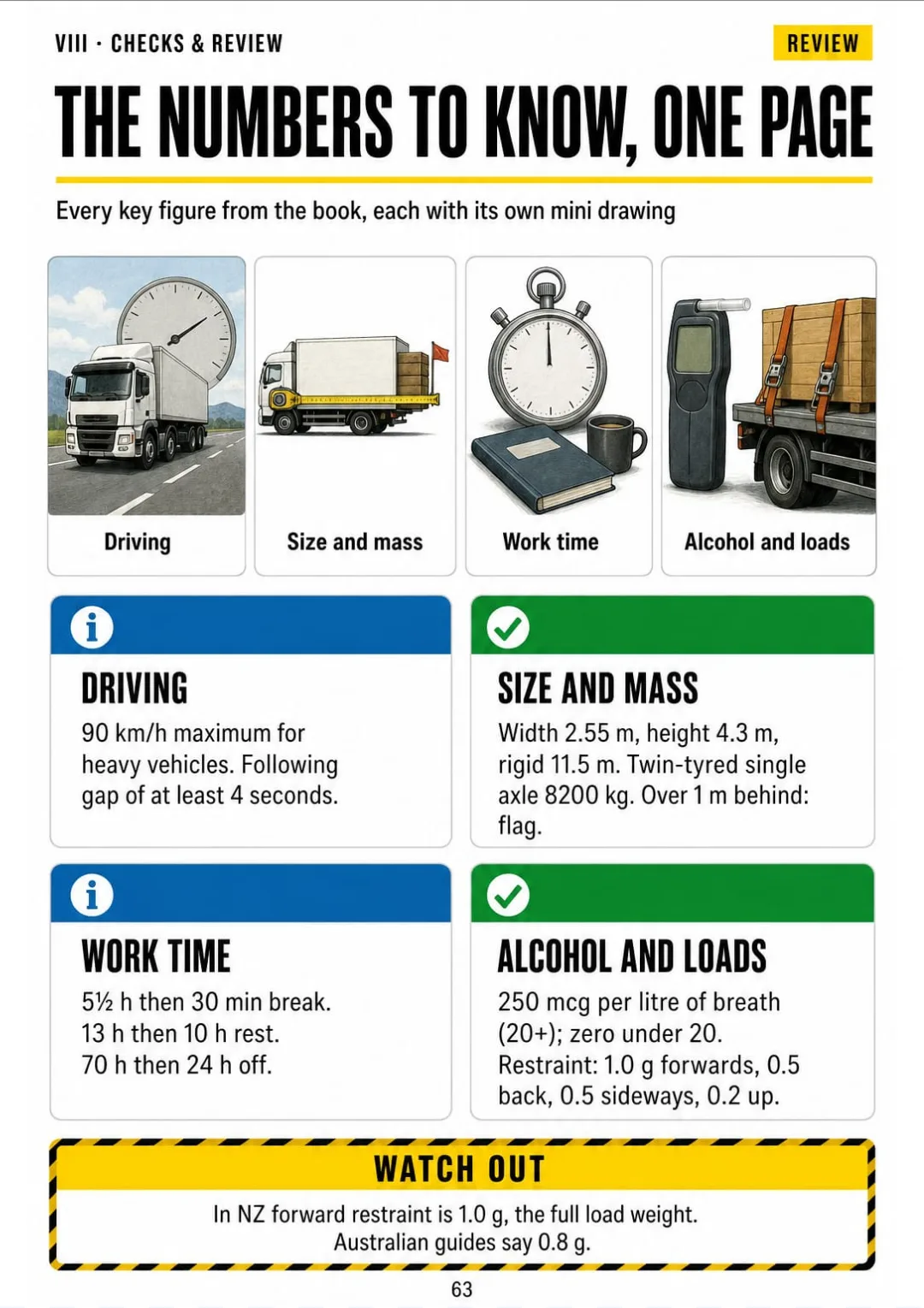
90 km/h, 4 s, 2.55 m, 4.3 m, 8200 kg, 5½/13/70 h, 250 mcg, 1.0 g.

Swipe to see more →

These are real pages from the book. The table of contents is the full one: 8 parts and 61 topics.

The Problem Isn't You. It's How It Was Explained to You.

You're in the test room and the question on the screen asks what the governor does when the air pressure reaches cut-out. All four answers look close.

You read it last night. But the Road Code gives you the air brake system in paragraphs: compressor, governor, reservoirs, valves and chambers, one after another, with nothing to show you how they connect.

Compressor → governor → reservoirs → foot valve → chamber → slack adjuster → drum.

In this book the air brake system is one page: one circuit drawn from start to finish, compressor → governor → reservoirs → foot valve → chamber → slack adjuster → drum, with the gauges marked.

Swept path, the four-second rule, load forces, work time and the in-cab air check get the same treatment: each one has its own page and its own drawing.

When the question comes up, you picture the circuit and follow the air. You understand it, and you answer without going back to the Road Code.

COMPARE FOR YOURSELF

The Same Topic, Two Ways to Study It

THIS
  • The manual: line after line after line
  • Swept path and off-tracking explained only in words
  • You go into the test still unsure
When a heavy motor vehicle negotiates a turn, the rear wheels do not follow the path described by the front wheels but travel on a tighter radius, a phenomenon generally referred to as off-tracking. The total area occupied by the vehicle and its overhangs during the manoeuvre constitutes the swept path, which increases in proportion to the wheelbase. Drivers should accordingly position the vehicle so as to allow sufficient clearance on the inside of the turn and continue to monitor the nearside mirror throughout.
FOR THIS
  • Off-tracking in one drawing, seen from above
  • The numbers and checks in one box
  • You see it, and it makes sense
Breakdown: hazards on, warning about 200 m back, more on bends and crests.
CONTENTS

Take a Look at the 8 Parts and 61 Topics

The licence and the test, truck size and mass, road rules, safe driving, air brakes, loads, work time and the final checks: 65 pages, all illustrated.

IThe Class 2 Licence and the Test · pp. 5-10
  1. What a Class 2 licence lets you drive
  2. The road from Class 1 to a full Class 2
  3. Driving on a Class 2 learner licence
  4. How the computer theory test works
  5. Gross, laden and unladen mass, explained once
  6. How to use this book and its drawings
IITruck Size, Mass and Visibility · pp. 11-18
  1. Width and height: 2.55 m and 4.3 m
  2. Axle mass: the weight sits on the axles
  3. Bridge and road restrictions on mass and speed
  4. Overhang and projecting loads
  5. Mirrors: what each one shows you
  6. Blind spots around a truck
  7. Being seen: lights, reflectors and rear marker plates
  8. Certificate of Fitness and RUC labels
IIIRoad Rules for Heavy Vehicles · pp. 19-28
  1. Speed limits for heavy vehicles: 90 km/h max
  2. Advisory speed signs and heavy vehicles
  3. Give way at intersections: the turning rule
  4. Roundabouts in a truck
  5. Keeping left, slow-vehicle bays and passing lanes
  6. Overtaking with a long vehicle
  7. Railway level crossings
  8. Signs meant for heavy vehicles
  9. Alcohol, drugs and fatigue limits
  10. Phones, crashes and what to do after one
IVDriving a Heavy Vehicle Safely · pp. 29-37
  1. The four-second rule
  2. Stopping distance = reaction + braking
  3. Swept path and off-tracking on turns
  4. Centre of gravity and rollover
  5. Going down hills: low gear before the top
  6. Going up hills and stopping on a slope
  7. Reversing a truck
  8. Wet roads, gravel, ice and wind
  9. Breakdowns: hazard lights and warning triangles
VAir Brakes · pp. 38-46
  1. The air brake system as one simple circuit
  2. Compressor and governor: cut-in and cut-out
  3. Reservoirs and draining water
  4. Reading the air pressure gauges in kPa
  5. The low-pressure warning
  6. Spring brakes: parking and emergency
  7. Slack adjusters and brake stroke
  8. Lag time: why air brakes respond later
  9. Engine brakes and retarders
VILoads and Load Security · pp. 47-53
  1. The forces a load has to withstand
  2. What happens to a load in a hard stop
  3. Tie-down vs direct restraint
  4. Straps, chains and their ratings
  5. Spreading the load over the axles
  6. Tippers and loose loads
  7. Liquids, livestock and moving loads
VIIWork Time and Logbooks · pp. 54-59
  1. Work time is more than driving time
  2. 5½ hours of work, then a 30-minute break
  3. 13 hours of work, then 10 hours of rest
  4. 70 hours, then 24 hours off
  5. Filling in a logbook page
  6. Fatigue: the warning signs
VIIIChecks, Review and Common Mistakes · pp. 60-65
  1. The daily walk-around check, in the same order
  2. The in-cab air brake check
  3. Tyres: tread depth, damage and dual spacing
  4. The numbers you have to know, on one page
  5. Common mistakes in the theory test
  6. The night before and the morning of the test

One Page, One Topic, All Clear

Think of it this way:

You're turning left out of a narrow yard with a loaded tipper, and the kerb is right where your rear wheels want to go. In the theory test, that same scene is a single question.

In the book, you open the swept path page and see the truck from above: the front wheels on one line, the rear wheels cutting inside, and the left mirror you keep checking.

Max 13 hours of work in a cumulative work day, then at least 10 hours of continuous rest.

Air brakes, load forces, the four-second rule, work time and rear overhang work the same way: each one on its own page, drawn.

Class 2 Truck Theory Illustrated is 65 illustrated pages in 8 parts, and it finishes with every number on one page, the common mistakes and the daily checks in order.

What you see drawn, you don't have to memorize.

What's Inside Class 2 Truck Theory Illustrated:

Ipp. 5-10

The Class 2 Licence and the Test

What a Class 2 lets you drive, the steps from Class 1 to a full Class 2, learner conditions, how the computer test works and mass terms explained once.

IIpp. 11-18

Truck Size, Mass and Visibility

Width and height limits, axle mass, bridge restrictions, overhang, mirrors, blind spots, lights and marker plates, CoF and RUC labels.

IIIpp. 19-28

Road Rules for Heavy Vehicles

Heavy vehicle speed limits, advisory speeds, give way, roundabouts, keeping left, overtaking, level crossings, heavy vehicle signs, alcohol and fatigue limits, phones and crashes.

IVpp. 29-37

Driving a Heavy Vehicle Safely

The four-second rule, stopping distance, swept path, rollover, going down and up hills, reversing, bad weather and breakdowns.

Vpp. 38-46

Air Brakes

See the air brake system as one circuit you can follow: compressor and governor, reservoirs, gauges in kPa, the low-pressure warning, spring brakes, slack adjusters, lag time and retarders.

VIpp. 47-53

Loads and Load Security

The forces on a load, a hard stop, tie-down vs direct restraint, straps and chains, spreading the load, tippers, liquids and livestock.

VIIpp. 54-59

Work Time and Logbooks

What counts as work time, the 5½, 13 and 70-hour limits with their breaks, a logbook page and the warning signs of fatigue.

VIIIpp. 60-65

Checks, Review and Common Mistakes

The daily walk-around, the in-cab air check, tyres, every number on one page, common mistakes and the night before the test.

At the end of the book: Every number to know on one page, the common theory test mistakes and the daily checks in order.
Plus: 2 Free Books

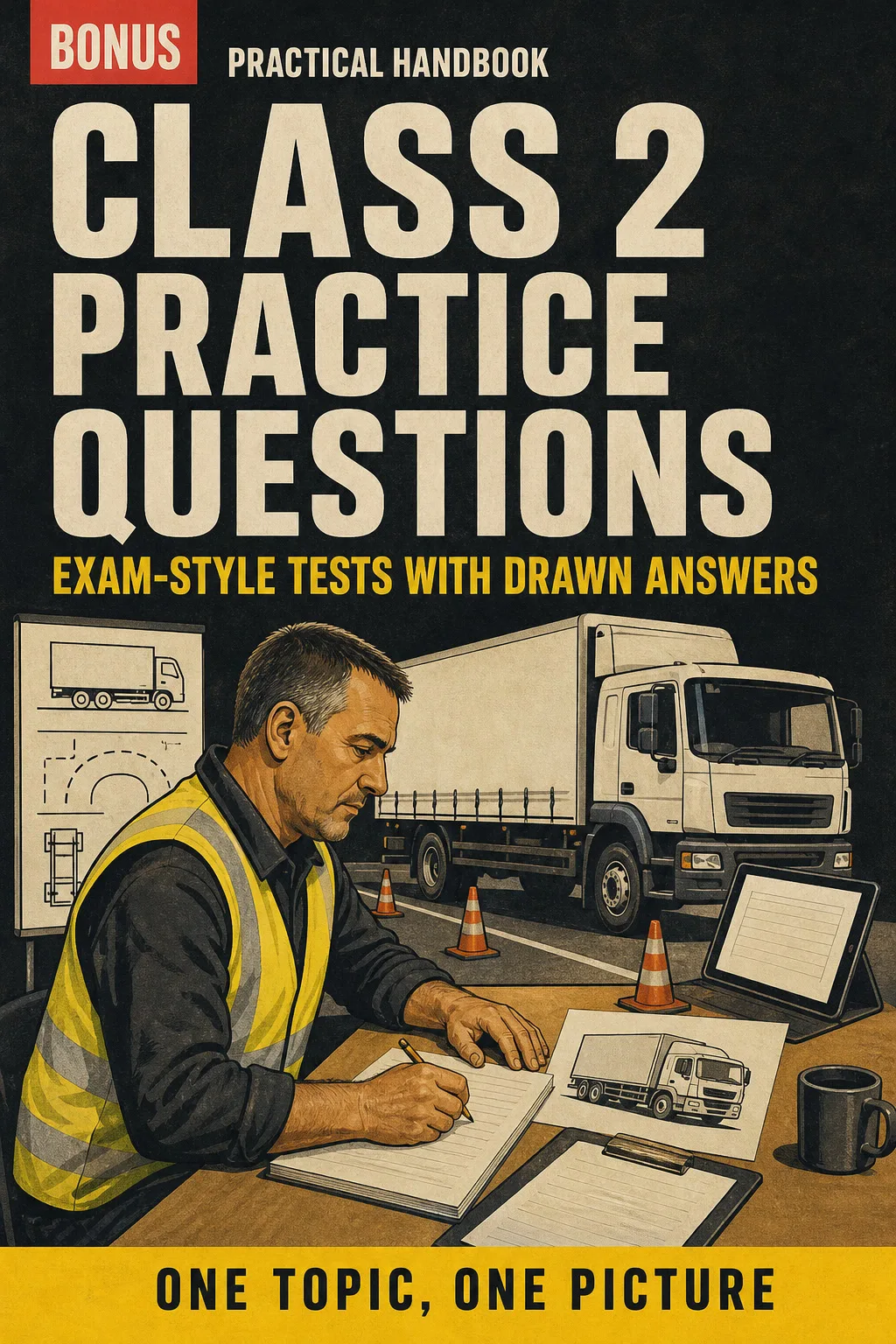
Class 2 Practice Questions: Exam-Style Tests with Drawn Answers

BONUS 1: «Class 2 Practice Questions: Exam-Style Tests with Drawn Answers»

Value on its own: US$ 17.90

Practise with multiple-choice questions in the style of the computer test, and every answer points you back to the drawing that explains it.

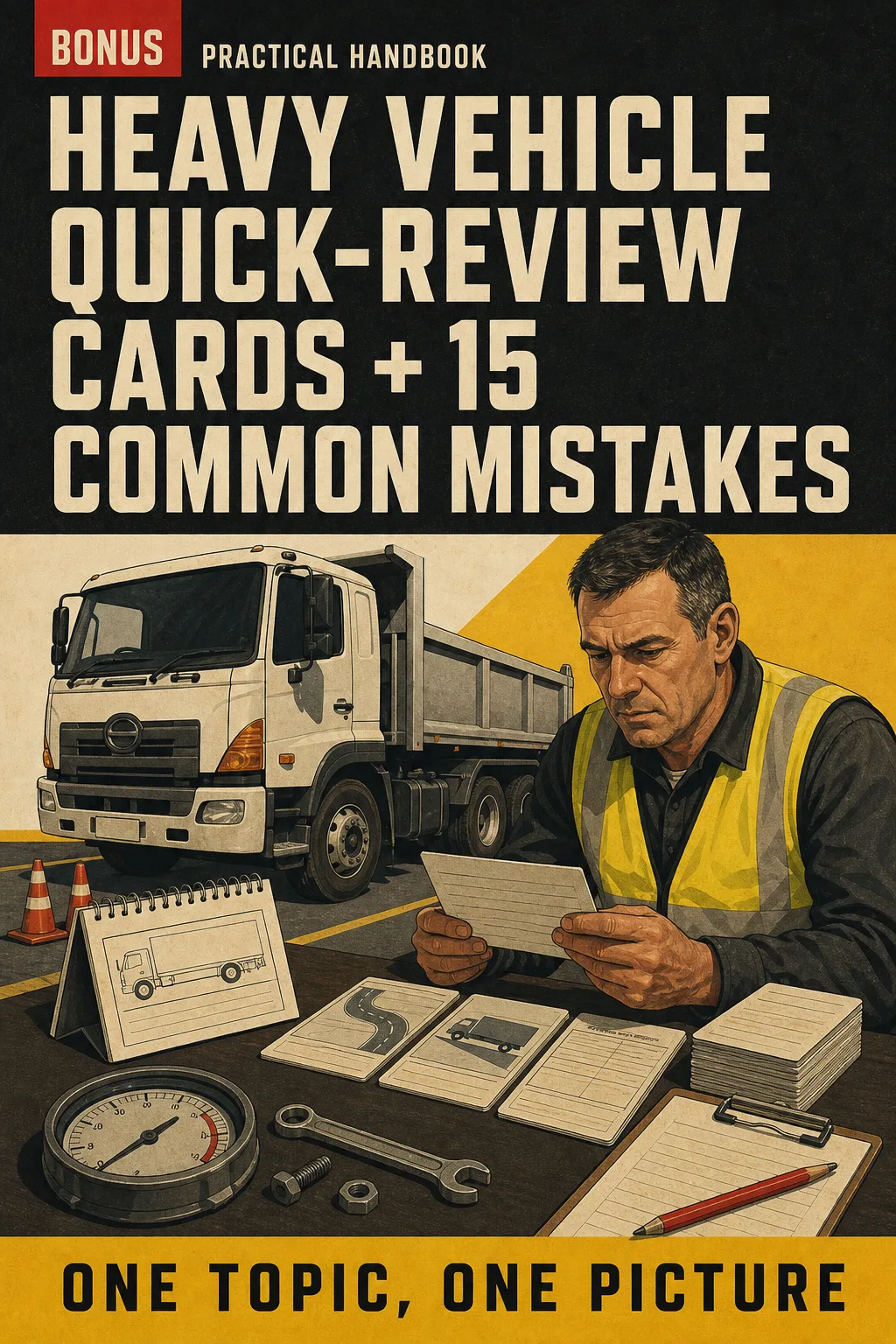
Heavy Vehicle Quick-Review Cards + 15 Common Mistakes

BONUS 2: «Heavy Vehicle Quick-Review Cards + 15 Common Mistakes»

Value on its own: US$ 14.90

Revise the numbers and rules that are easiest to mix up on a few printable cards, with the most common mistakes shown before and after.

Class 2 Truck Theory Illustrated with 2 Free Books

  • Class 2 Truck Theory Illustrated: 65 illustrated pagesUS$ 63
  • BONUS 1: Class 2 Practice Questions: Exam-Style Tests with Drawn AnswersUS$ 17.90
  • BONUS 2: Heavy Vehicle Quick-Review Cards + 15 Common MistakesUS$ 14.90
  • High-resolution PDF to printIncluded
Total value US$ 95.80
YOUR PRICE:
US$ 27
You save US$ 68.80
YES, I WANT CLASS 2 TRUCK THEORY ILLUSTRATED FOR US$ 27

📄 This is a digital PDF book sent to your email: nothing is printed or shipped.

Secure purchaseEncrypted payment30-day guarantee

PDF by email: We email you Class 2 Truck Theory Illustrated as a PDF, together with the two free books. It's a single payment: no installments, no extra charges.

Who This Book Is For

You're studying for your Class 2 learner

You're studying for your Class 2 learner

Each topic sits on its own page, so you can do a few pages a night and see how the pieces fit together.

Your theory test is booked

Your theory test is booked

The numbers page, the common mistakes and the practice questions to go over in the last week before the test.

You already drive for a living

You already drive for a living

A printed reference to keep in the cab: the air check, work time and load forces at a glance.

Everything You Get Today

US$ 95.80US$ 27
YES, I WANT CLASS 2 TRUCK THEORY ILLUSTRATED FOR US$ 27

📄 This is a digital PDF book sent to your email: nothing is printed or shipped.

30DAYS
GUARANTEE

30-Day Guarantee

Try Class 2 Truck Theory Illustrated for 30 days, bonus books included.

We refund everything if the file won't open, if the book isn't what you see here, if you were charged twice or if the email doesn't arrive. Just email us.

You pay once. No subscriptions.

Frequently Asked Questions

Is it for me if I've been driving for years but haven't sat an exam in decades?

Yes. It doesn't teach you to drive: it shows the theory, one topic per page, with a drawing first and the rule underneath. You don't need to be a student to follow it.

Where does the content come from?

It's written for New Zealand from the start, not adapted from an Australian or UK book. The content comes from the current New Zealand heavy vehicle Road Code, the Land Transport Rules it draws on (Road User, Work Time and Logbooks, Vehicle Dimensions and Mass) and the NZ Truck Loading Code. Metric units, NZ rules, NZ spelling. Rules can change, so for the latest test requirements always check the NZTA website.

Is it official material?

No. It's an independent illustrated study book. It isn't published, approved or endorsed by NZ Transport Agency Waka Kotahi, and it doesn't give you a certificate: your licence only comes from passing the NZTA test.

The Road Code is free online. What does this add, and does it replace driver training?

The Road Code gives you the rules as text, and it's free. This book takes the same theory and puts each topic on its own page: the drawing first, the numbers in one box, and the common mistakes and every number to know gathered at the end. It doesn't replace the Road Code, driver training or practical lessons. Check the NZTA website for the current test requirements.

Are the practice questions the ones from the test?

No. They're written for this book, in the multiple-choice style of the computer test, and every answer points you back to the drawing that explains it.

When and how does it arrive?

The book and the 2 free books arrive as PDFs by email, at the address you enter when you pay.

Do I have to pay every month?

No. It's a one-off payment. No subscription.

Can I have it on paper?

Yes. The PDF is made to print, at home or at any print shop, and you can keep it in the cab.

How does the refund work?

You have 30 days. We refund everything if the file won't open, if the book isn't what you see on this page, if you were charged twice or if the email doesn't arrive: just email us.

Before You Close This Page

No more rereading the Road Code with nothing sticking.

The air brake circuit: you see it drawn, and that's it.

You walk into the test knowing where everything is.

Drawings make studying faster.

The book is right below.

One-time payment: US$ 27 · Guarantee: 30 days · PDF by email

YES, I WANT CLASS 2 TRUCK THEORY ILLUSTRATED FOR US$ 27

📄 This is a digital PDF book sent to your email: nothing is printed or shipped.